Can Coffee Grounds Go Down the Drain?
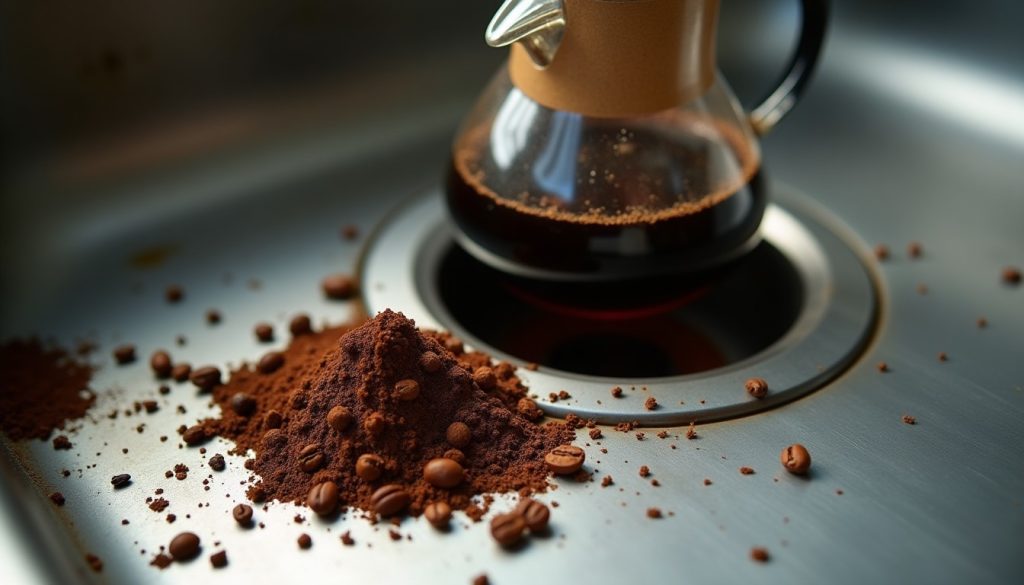
No, coffee grounds down the drain do not dissolve. They sink, collect in the P-trap and low spots, and bind with grease into dense clogs, so scrape them into the trash or compost instead.
Key Takeaways
- Coffee grounds do not dissolve in water. InSinkErator, a leading disposal maker, calls grounds “sedimentary” and says too much at once can cause a clog or slow drain.
- The EPA SepticSmart flyer tells homeowners not to rinse coffee grounds into the sink and to throw them away instead.
- Two-thirds of American adults (66%) drink coffee each day and average 3 cups, according to the National Coffee Association Spring 2025 report, so grounds pile up fast in a busy kitchen.
- The “grounds clean your drain” tip is a myth. Grounds are too soft to scour pipe walls and add to the sludge that causes odors.
- A grounds clog usually sits in the P-trap directly under the sink, where pulling and rinsing the trap clears it without chemicals.
- Oregon State University Extension measured used grounds at about 2% nitrogen with a carbon to nitrogen ratio near 20 to 1, which makes them a good compost ingredient.
Can coffee grounds go down the drain?
No. Coffee grounds are insoluble plant particles that are heavier than water, so they drop out of the flow as soon as it slows. In a kitchen sink that happens first in the P-trap, then along any flat or sagging run of drain pipe. Over weeks they pack into a wet, sandy mass that narrows the pipe and catches everything else you rinse.
The trouble is slow and invisible. A sink can drain fine for months while a layer of grounds builds in the bottom of the trap. Then one greasy pan or a handful of rice tips it from slow to stopped.
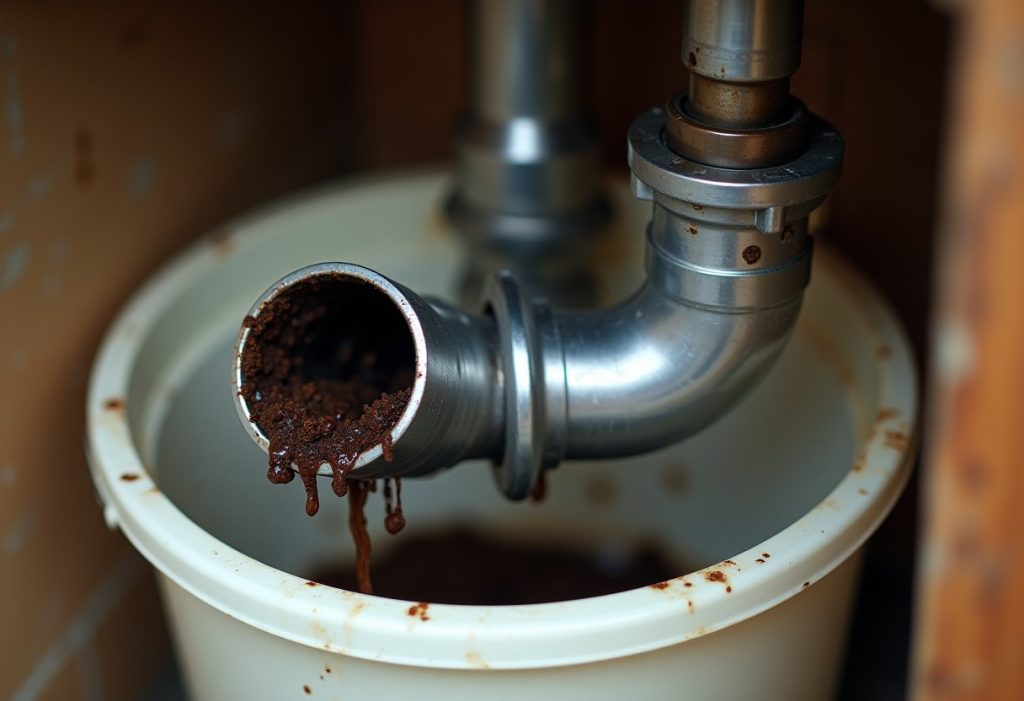
What happens when coffee grounds go down the sink?
They settle, stack, and bind. Grounds sink to the low point of the trap because that curved section is designed to hold water. Fats from cooking and dish soap residue coat the grounds and glue them together, and the mix hardens into a plug far denser than either material alone. The same chemistry drives the much larger grease blockages that sewer utilities pull from city mains.
Fats, oils and grease are the binder. Our guide on pouring grease down the drain explains how cooled fat clings to pipe walls; grounds give that fat a gritty skeleton to build on. A kitchen line that sees both, day after day, is the classic candidate for a clog right at the trap arm.
Older homes face more risk. Galvanized and cast iron drains roughen inside with age and catch particles that slide past smooth PVC, and flat horizontal runs do the same.
Are coffee grounds bad for a garbage disposal?
Grounds will not hurt the grinder, but they still clog the drain below it. InSinkErator’s own guidance says grounds and eggshells pass through a disposal without harming it, then warns that both are sedimentary and can clog a drain if too much goes in at once or the plumbing is restricted. The maker’s advice is to feed them gradually with a strong flow of cold water.
That nuance matters. The disposal does its job, but it cannot make grounds any smaller than they already are. They leave the grinding chamber as the same fine grit they went in as, and they settle in the trap and drain line exactly as they would without a disposal.
A disposal also does not solve odor. If your unit smells, the source is usually food film stuck to the chamber walls, the underside of the rubber splash guard and the drain line. Our walkthrough on how to clean a garbage disposal covers the ice, salt and brush methods that actually remove that film.
Do coffee grounds clean drains or remove odors?
No. The claim that coffee grounds scrub pipes or deodorize a sink is a myth that plumbers hear constantly. Wet grounds are soft and light, so they cannot scour buildup off a pipe wall. Any coffee smell you notice fades within minutes, while the grounds themselves stay behind in the trap and feed the sludge that caused the odor.
A smelly drain usually has organic film in the trap or a dry trap letting sewer gas through. Cleaning or refilling the trap fixes it; more grounds only feed the bacteria.
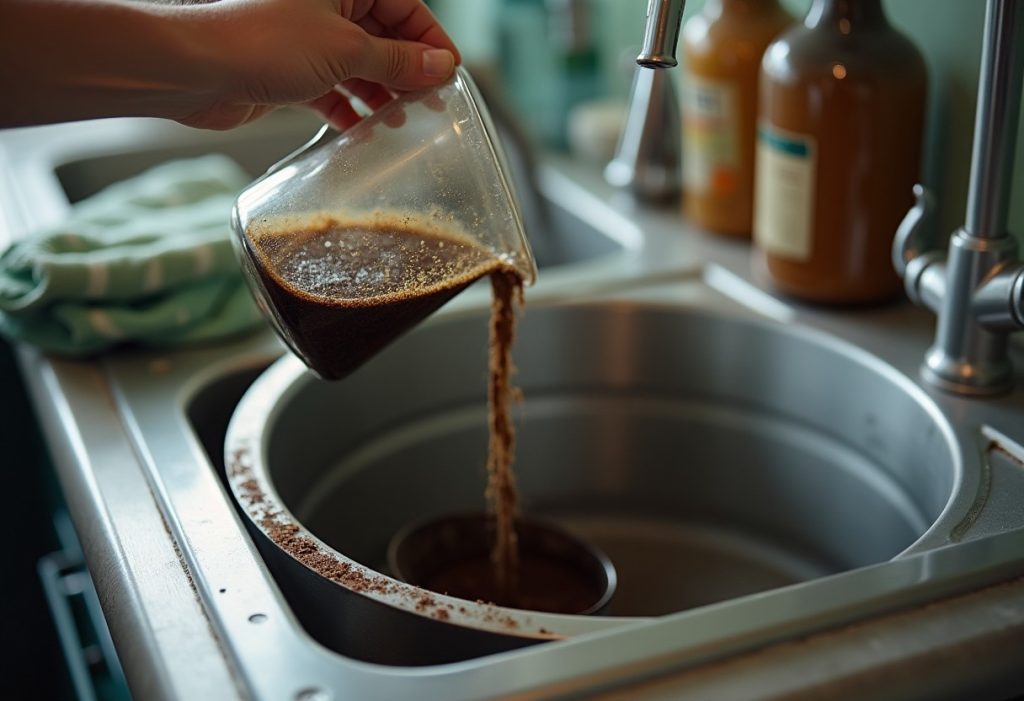
How many coffee grounds does a typical home send toward the sink?
More than most people think. The National Coffee Association’s Spring 2025 survey found 66% of American adults drink coffee each day, at an average of 3 cups, and 71% of past-day drinkers had coffee made only at home. Every drip pot, pour-over and French press leaves wet grounds that someone has to scrape out.
Brewing method changes where the grounds end up. NCA found 62% of adults own a drip coffee maker, which leaves grounds in a filter that lifts out cleanly. French presses, pour-over cones without paper filters, cold brew jars and espresso portafilters leave loose grounds or wet pucks that tempt people to rinse them into the sink.
No primary source measures grounds per household, so we do not estimate one. A daily habit at this scale still turns small rinses into a steady load on one short section of pipe.
Which coffee ground habits put your drain most at risk?
Rinsing loose grounds from a French press, espresso puck or cold brew jar carries the most risk, because it sends a large dose of grit into the trap at once. A few stray grounds from a rinsed mug carry little risk. The table ranks common situations by what tends to happen in the pipe and the fix for each.
| Situation | Risk to the drain | What to do |
|---|---|---|
| French press dregs rinsed into the sink | High. A full batch of loose grounds lands in the trap at once. | Swirl with a little water, pour through a mesh strainer, dump the solids in the trash or compost. |
| Espresso puck knocked into the sink | High. A compact cake of fine grounds sits in the drain opening. | Use a knock box or tap the portafilter over the trash. |
| Cold brew grounds from a jar or bag | High. Long steeping leaves a large, saturated mass. | Lift the bag or strain the jar, then compost the grounds. |
| Grounds plus greasy dishwater | Very high. Fat binds grounds into a hard plug. | Wipe pans with a paper towel first and keep both out of the sink. |
| Drip filter or pod residue in a mug | Low. Only a few particles reach the trap. | Rinse normally; use a sink strainer basket to catch stray bits. |
| Grounds fed slowly into a running disposal | Moderate. The grinder is fine, the trap still collects grit. | Follow InSinkErator’s advice of small amounts with strong cold water, or skip it. |
| Home on a septic system | High over time. Grounds add solids to the tank. | Follow EPA SepticSmart guidance and keep grounds out of every drain. |
| Grounds flushed down the toilet | Moderate to high. Grit settles in the closet bend and building drain. | Trash or compost only; EPA lists grounds as never-flush items. |
Can coffee grounds go into a septic system?
EPA says no. Its SepticSmart homeowner flyer lists “rinse coffee grounds into the sink” as a don’t and “properly dispose of coffee grounds” as a do. EPA’s septic care page also lists coffee grounds among things never to flush and advises eliminating or limiting garbage disposal use to cut the solids entering the tank.
The reason is volume in the tank. A septic tank separates waste into a floating scum layer, a liquid middle and a sludge layer on the bottom. Grounds break down slowly, so they mostly add to the sludge. According to EPA’s septic care guidance, if the tank fills with solids they can be pushed into the drainfield and clog its pipes.
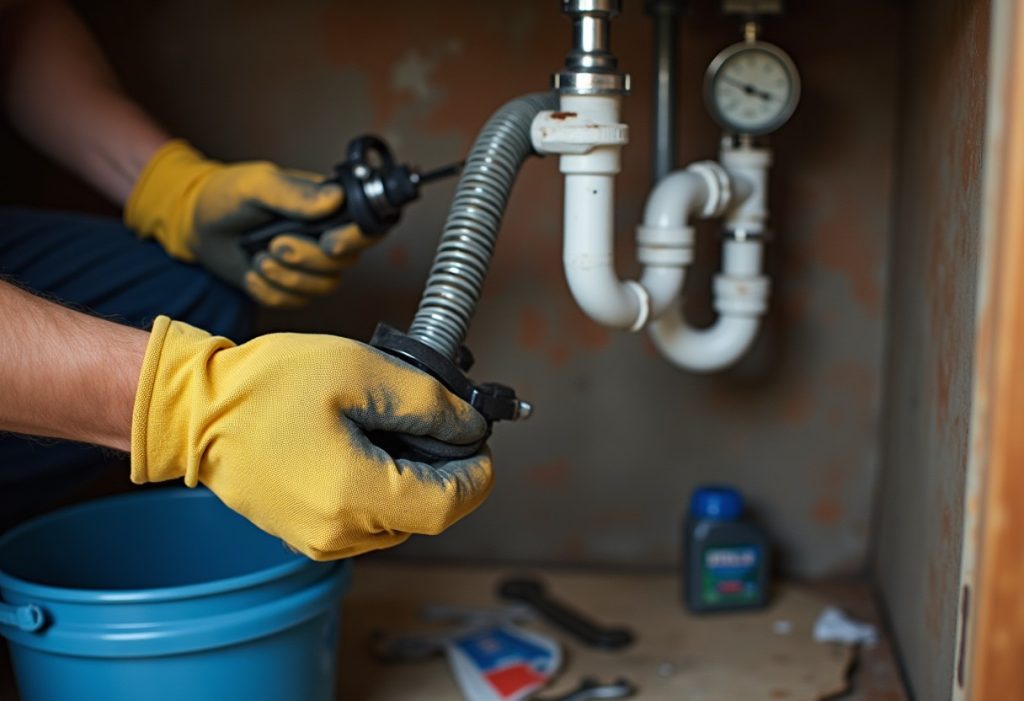
How do you fix a sink clogged with coffee grounds?
Pull and clean the P-trap first. Grounds almost always collect in that U-shaped bend directly under the sink, and removing it by hand usually clears the clog without chemicals. If the trap comes out clean and water still backs up, the clog sits in the trap arm or branch line, and a hand drain snake is the next step.
- Bail standing water out of the sink with a cup and put a bucket under the trap.
- Loosen the two slip nuts on the P-trap by hand or with groove-joint pliers, then lower the trap into the bucket.
- Dump the grounds in the trash, scrub the trap with a bottle brush, and rinse it in another sink or outdoors.
- Look into the trap arm going toward the wall and pull out any packed grounds with a gloved finger or a bent wire.
- Reassemble with the washers seated, hand-tighten the nuts, and run water to check for drips.
- If the sink still drains slowly, feed a quarter-inch hand snake through the trap arm and turn it until it breaks through.
Our full guide on how to unclog a drain covers plunging technique, snake sizes and when a clog is deep enough to call a plumber.
Avoid chemical drain openers on a sink full of standing water. They rarely dissolve grounds, which are fiber rather than hair or grease. The caustic water then sits in the bowl and the trap, where it can splash on you when you open the trap or plunge, and it can damage older metal pipes and finishes.
What should you do with used coffee grounds instead?
Put them in the trash or the compost. Grounds are one of the better compost ingredients a kitchen produces. In trials by the Lane County office of Oregon State University Extension, grounds tested at about 2 percent nitrogen with a carbon to nitrogen ratio near 20 to 1. Piles that were 25 percent grounds by volume held 135 to 155 degrees Fahrenheit for at least two weeks.
The same OSU release cautions that uncomposted grounds are not a ready-made nitrogen fertilizer, so blend them with leaves, straw or shredded paper rather than piling them straight around plants. Paper filters can go into the compost with the grounds.
- Keep a small lidded container next to the coffee maker and empty it into the compost or trash.
- Use a fine mesh strainer for French press and cold brew dregs before rinsing the carafe.
- Fit the sink with a strainer basket so stray grounds from mugs get caught.
- Check whether your city collects food scraps curbside; many programs accept grounds and paper filters.
How we sourced this
We reviewed the top-ranking pages for “coffee grounds down the drain” and related questions in October 2026, then cited only primary sources: InSinkErator’s disposal guidance, the US EPA SepticSmart flyer and septic care page, the National Coffee Association’s Spring 2025 National Coffee Data Trends release (fielded January 2025), and an Oregon State University Extension composting release. Plumbing company blogs informed the coverage map but are not cited for numbers. We found no primary data on grounds produced per household, so we did not estimate one. Clog-fix steps reflect standard residential drain practice; check local code before altering drain piping.
Frequently asked questions
Can you put coffee grounds down the drain if you run a lot of water?
Running water helps only a little. Grounds are heavier than water and do not dissolve, so they drop out wherever the flow slows, which is the P-trap and any flat or sagging section of drain pipe. A strong flush moves them a few feet further down the line, where they settle anyway. Scraping grounds into the trash or compost is the only habit that keeps them out of the pipes.
Are coffee grounds bad for a garbage disposal?
Not for the grinder itself. InSinkErator says grounds will not harm a disposal and pass through it, but it calls them sedimentary and warns that a large amount at once, or restricted plumbing, can cause a clog or slow drain. The disposal cannot grind grounds any smaller, so they still settle in the trap and drain line below it.
Do coffee grounds clean or deodorize drains?
No. The idea that grounds scrub pipes or freshen a smelly sink is a myth. Grounds are not abrasive enough to scour anything inside a pipe, and they add to the sludge that causes odors in the first place. A garbage disposal smell usually comes from food film on the grinding chamber and splash guard, which needs cleaning, not more grounds.
Can coffee grounds go in a septic system?
EPA SepticSmart guidance says not to rinse coffee grounds into the sink and lists them among things never to flush. Grounds are solids that do not break down quickly, so they add to the sludge layer in the tank and can shorten the time between pumpings. EPA says household tanks are typically pumped every three to five years.
What happens if you accidentally pour coffee grounds down the sink?
A single small spill rarely causes a clog. Run hot tap water for a minute to push the grounds through the trap, then watch how the sink drains for a few days. If water starts to pool or gurgle, the grounds have likely settled in the P-trap, and pulling and rinsing the trap is the fastest fix for most kitchen sinks.
How do you get coffee grounds out of a clogged sink?
Bail out standing water, set a bucket under the trap, and loosen the two slip nuts on the P-trap by hand or with pliers. Dump and rinse the trap in another sink, check the trap arm toward the wall, and reassemble. If the clog sits past the trap, a hand drain snake usually breaks it up. Skip chemical drain openers on a full sink.
Can you flush coffee grounds down the toilet?
No. Toilets and their drain lines are built for human waste and toilet paper only. Grounds settle in the same way they do under a sink, and EPA SepticSmart guidance names coffee grounds on its list of things never to flush. Homes on a sewer line face the same buildup risk in the building drain and lateral.
Where should used coffee grounds go instead?
The trash or a compost bin. Oregon State University Extension trials found grounds held about 2 percent nitrogen and a carbon to nitrogen ratio near 20 to 1, close to animal manure. Piles with grounds at 25 percent of the volume stayed between 135 and 155 degrees for at least two weeks. Mix grounds with leaves or other browns before use near plants.
What's the best way to dispose of coffee grounds?
Put used grounds in the trash or compost instead of the sink. Oregon State University Extension trials found grounds held about 2 percent nitrogen with a carbon to nitrogen ratio near 20 to 1, and piles at 25 percent grounds by volume held 135 to 155 degrees for at least two weeks. Blend grounds with leaves, straw or shredded paper rather than piling them around plants.
What is the best thing to do with old coffee grounds?
Put them in the trash or compost bin rather than rinsing them down the drain. Oregon State University Extension found grounds test at about 2 percent nitrogen with a carbon to nitrogen ratio near 20 to 1, similar to animal manure. Paper filters can go into the compost too, and a lidded container next to the coffee maker makes emptying grounds into compost or trash easier.


