Can You Pour Grease Down the Drain?
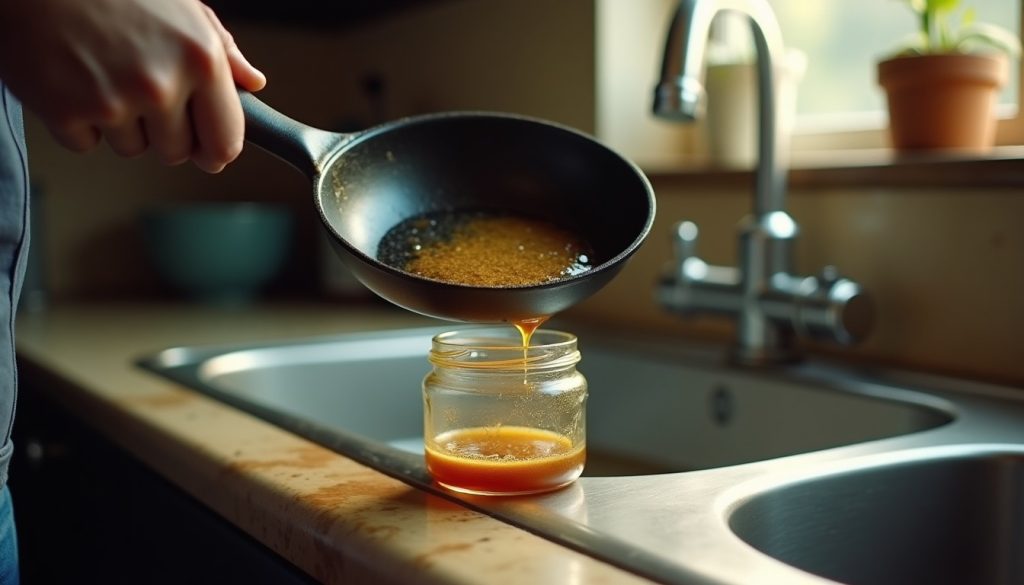
No, you cannot pour grease down the drain, because it cools, hardens, and grabs calcium in the sewer to form soap-like deposits that clog your pipes first and the city’s pipes next.
Key Takeaways
- The EPA reports that grease from restaurants, homes, and industrial sources is the most common cause of reported sewer blockages, at 47%.
- NC State University researchers found that hardened sewer grease deposits are calcium-based fatty acid salts, which is to say a lump of soap, published in Environmental Science & Technology.
- The EPA estimates 23,000 to 75,000 sanitary sewer overflows happen in the US every year, releasing 3 billion to 10 billion gallons of untreated sewage.
- New York City’s Department of Environmental Protection has said cooking grease buildup causes 60% of confirmed sewer backups in the city (CBS New York, 2017).
- Hot water and dish soap do not make grease safe to pour. They move it a few feet or a few blocks before it cools and sticks.
- The safe options are boring and cheap: cool it, contain it, and trash it, or bring large volumes to a collection program such as Pasco County, Florida’s cooking oil to biodiesel program.
Can you pour grease down the drain at all?
No. You should not pour grease down the drain in any amount, at any temperature, with or without soap. Fats, oils, and grease (FOG, in utility language) leave the pan as a liquid and turn solid or sticky as soon as they meet cooler pipe walls. Every pour adds a layer, and the layers trap food scraps, coffee grounds, and hair until water cannot get past.
A tablespoon of bacon fat feels harmless. A year of tablespoons is a clog.
The answer is the same for every type of cooking fat. Butter, lard, and bacon grease harden fastest, and liquid oils still coat pipes.
What happens to grease after it goes down the drain?
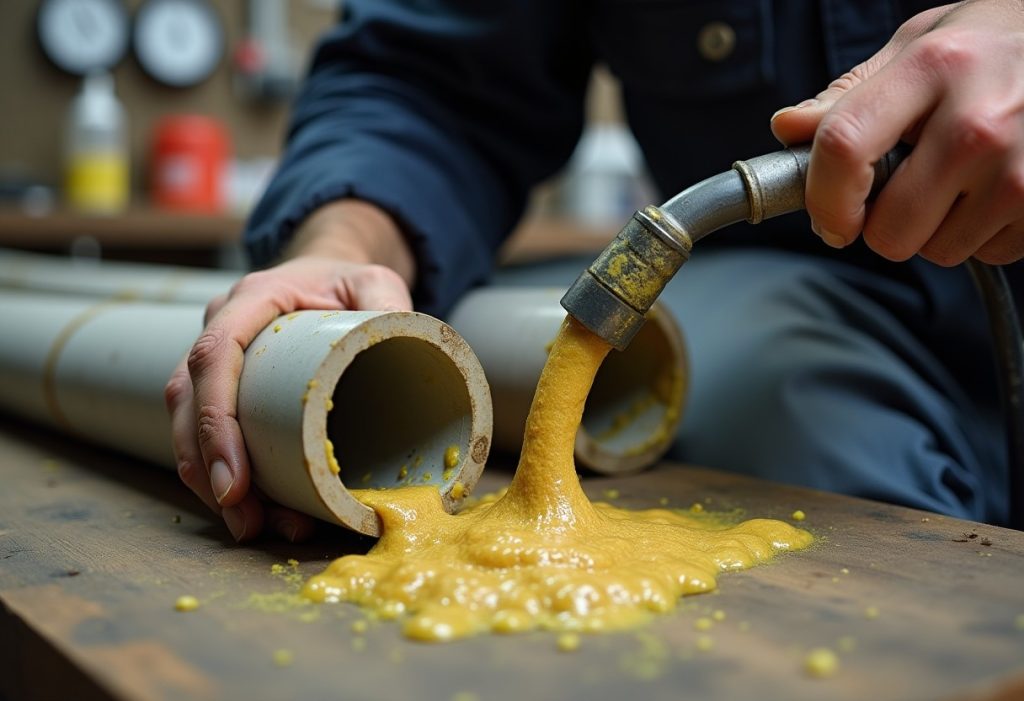
Grease that goes down the drain cools, separates from the water, and sticks to the top and sides of the pipe. Inside the sewer it goes one step further. Researchers at NC State University found that the hard deposits that choke sewer lines are calcium-based fatty acid salts, formed when fats break down into free fatty acids that react with calcium in the sewer.
In plain terms, the grease turns into a lump of hard soap. The NC State team, led by civil engineering professor Joel Ducoste, confirmed this by comparing deposits pulled from real sewer lines against deposits made in the lab, and published the work in Environmental Science & Technology. They also found calcium can leach out of concrete sewer structures, which gives the reaction a steady supply.
That is why sewer grease does not rinse off. It is a crust that bonds to the pipe and grows with every pour.
Your own drains clog first because they are the narrowest part of the trip. A 1-1/2 inch kitchen drain gives grease little room, and food particles catch on the sticky film.
Why do cities care so much about the grease in your sink?
Cities care because grease in household and restaurant drains is a leading cause of sewer overflows, which put raw sewage into basements, streets, and waterways. The EPA’s 2004 Report to Congress found grease was the most common cause of reported blockages at 47%, and New York City has blamed cooking grease for 60% of its confirmed sewer backups.
The EPA Report to Congress estimated 23,000 to 75,000 sanitary sewer overflows per year in the US and said the majority of overflow events are caused by sewer blockages.
Older neighborhoods with small pipes get hit hardest. WNYC, citing Crain’s New York, reported that about 80% of sewer backups in parts of southeast Queens were caused by grease, in an area where older sewer pipes are roughly half the diameter of those elsewhere in the city.
The figures measure different things, from blockages nationwide to backups in one city. The National Association of Counties program profile says 40% of all sanitary sewer overflows are attributed to fat, oil, or grease. Read them as a range.
Restaurants carry much of the load, which is why cities require them to install and pump a grease trap. The EPA puts collected trap waste and uncollected grease at 800 to 17,000 pounds per restaurant per year, and notes New York City set a $1,000-per-day fine after finding a 73% non-compliance rate with its grease trap rules. Homes have no trap.
Do hot water and dish soap make it safe to pour grease down the drain?
No. Hot water and dish soap only move grease down the drain a little farther before it cools and settles. Hot water keeps fat liquid for seconds, not miles. Dish soap breaks fat into tiny droplets, but it does not destroy it, and those droplets can rejoin once the soapy water thins out downstream.
The result is a clog in a worse spot. Instead of a greasy P-trap you can pull by hand, you get a coated drain line inside the wall, a buildup at the bend where your sewer lateral turns toward the street, or a contribution to a blockage in the city main.
Soap also does not stop the chemistry NC State identified, since sewer deposits are already soap-like calcium salts.
Boiling water has the same short reach and can stress PVC fittings. Cold water just hardens grease sooner.
Does a garbage disposal help with cooking grease?
No. A garbage disposal chops food solids, but grease passes straight through the grinding chamber and coats the drain line below it. Worse, the disposal adds fine food particles that stick to the grease film, so a sink with a disposal often builds a grease clog faster than one without. Faster buildup near the disposal eventually feeds the same sludge that forms massive sewer blockages downstream.
Grease also coats the disposal itself. It builds up on the grinding plate, under the splash guard, and inside the chamber, where it goes rancid and smells. If yours has a sour odor, it is time to clean a garbage disposal with ice, salt, and a scrub of the splash guard, then keep fat out of it from then on.
What should you do if you already poured grease down the drain?
If you already poured grease down the drain, act while it is still warm. Run the hottest tap water you have for a few minutes with a squirt of dish soap to push it past the trap, then watch how the sink drains over the next few days. Slow drainage means you move on to mechanical clearing, not more chemicals.
- Stop adding fat. Do not pour more grease, and do not run the garbage disposal with greasy scraps.
- Flush while warm. Run hot tap water for three to five minutes with dish soap. This is a rescue step for a single accident, not a habit.
- Watch the drain. If the sink drains normally for a week, you are likely fine. A gurgle or slow drain means a film is forming.
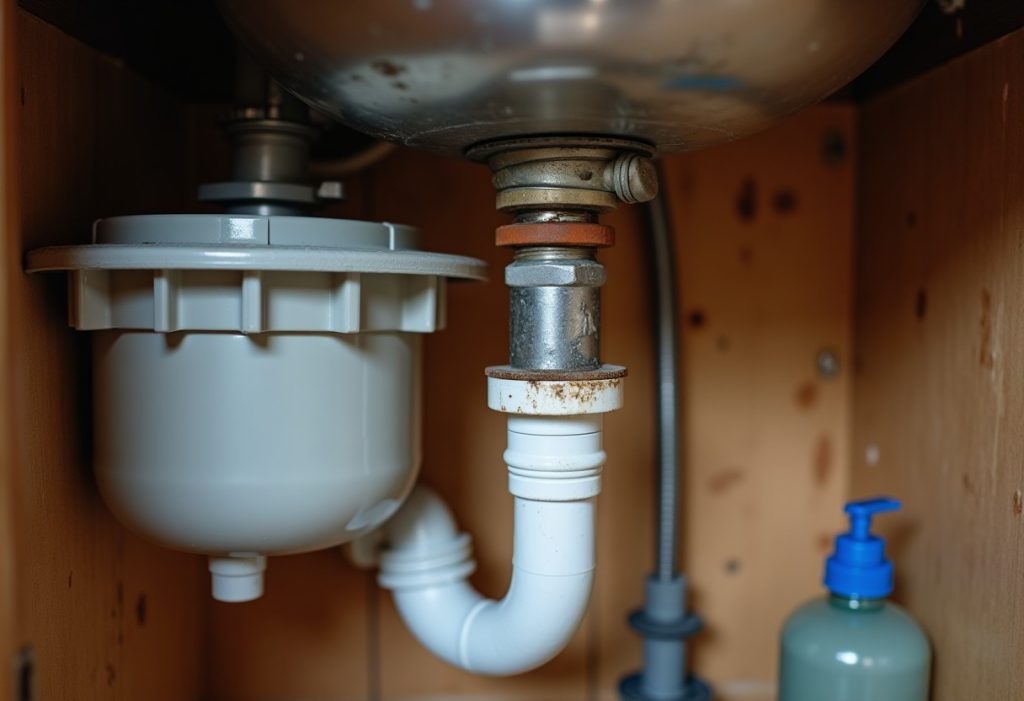
- Clear the trap. Put a bucket under the P-trap, loosen the slip nuts, and wipe out the gunk. Many grease clogs live right there.
- Plunge or snake. Use a sink plunger with the other basin or overflow sealed, or a 1/4 inch hand snake. Our guide to unclog a drain covers both.
- Try an enzyme treatment for maintenance. Bacterial and enzyme drain products digest organic film slowly, usually overnight. They suit a sluggish drain, not a full blockage.
- Call a plumber. If the clog sits past the reach of a hand snake, or if other drains are slowing too, a plumber can cable or hydro-jet the line.
Be careful with caustic drain cleaners. Lye-based products turn grease into soap, but they are harsh on old metal pipes and dangerous to splash. Follow the label and never mix cleaners.
How do you know grease has reached your main sewer line?
Grease has likely reached the main line when more than one fixture acts up at the same time. A single slow kitchen sink is a branch clog. A kitchen sink, a tub, and a toilet that all drain slowly, gurgle, or back up together point to a main sewer line clog.
- Water comes up in the tub or shower when you run the washing machine or flush a toilet.
- Toilets gurgle when the kitchen sink or dishwasher drains.
- A floor drain in the basement backs up or smells like sewage.
- Every drain is slow, even ones that never see grease.
A main line clog is a stop-using-water situation. In many areas the homeowner owns the sewer lateral from the house to the city connection, so the repair bill is yours. A plumber will usually cable the line or hydro-jet it, then run a camera to confirm whether grease is the only problem or whether roots or a sag in the pipe helped trap it.
How do you dispose of cooking grease safely?
To dispose of cooking grease safely, let it cool, pour it into a container with a lid, and put it in the trash once it is full. Wipe pans with a paper towel before washing them. For larger amounts, strain and reuse the oil or take it to a household cooking oil collection site if your city or county runs one.
| Method | Safe? | Why |
|---|---|---|
| Pour down the sink with hot water | No | Grease cools and hardens farther down the line, where it is harder to reach |
| Pour down the sink with dish soap | No | Soap breaks fat into droplets but does not destroy it, and droplets can rejoin downstream |
| Run it through the garbage disposal | No | Disposals grind solids only; grease coats the chamber and the drain below |
| Flush it down the toilet | No | Same building drain, same sewer lateral, same city main |
| Pour it on the lawn or into a storm drain | No | Draws pests, coats soil, and storm drains often flow to creeks untreated |
| Add to backyard compost | Small amounts only | Large amounts slow composting and draw animals; follow your local program’s rules |
| Cool, pour into a can or jar, trash it | Yes | Keeps fat out of pipes entirely; the standard advice from utilities |
| Absorb with paper towels, cat litter, or a grease solidifier | Yes | Turns liquid oil into a solid you can bag and trash |
| Strain and reuse for cooking | Yes | Cuts waste; strain out food bits and store covered |
| Household cooking oil drop-off | Yes, best for large volumes | Programs such as Pasco County, Florida’s turn collected oil into biodiesel |
The simplest habit is a grease can. Keep a tin can or glass jar near the stove, pour cooled fat into it, and trash it sealed when full.
Collection programs vary by location. Pasco County, Florida, collects household cooking oil and grease and converts it to biodiesel to power county vehicles and equipment, according to its National Association of Counties award profile. Many counties take cooking oil at household hazardous waste or recycling centers, so check with your local solid waste department.
What about bacon grease, deep fryer oil, and liquid cooking oils?
Bacon grease, deep fryer oil, and liquid oils such as canola and olive oil all stay out of the drain, but each one has its own easy disposal path. Bacon grease hardens fast in a jar. Fryer oil is best strained and reused, then taken to a drop-off. Small amounts of liquid oil can be absorbed with paper towels and trashed.
Bacon grease
Bacon fat is solid at room temperature, which makes it the easiest to manage and the fastest to clog a pipe. Pour it into a jar while warm, let it set, then cook with it or trash it.
Deep fryer and turkey fryer oil
Fryers hold far more oil than a skillet, often gallons in an outdoor turkey fryer, so they are the pour most likely to cause a serious clog. Let the oil cool completely, sometimes overnight, then funnel it back into its original jug. Reuse it while it smells clean, then take the jug to a collection site or trash it sealed if your hauler allows.
Olive, canola, and vegetable oil
Liquid oils do not set up on the counter, which tempts people to think they are drain safe. They are not. They still coat pipe walls and supply the fatty acids that NC State found forming sewer deposits.
How we sourced this
We reviewed the top-ranking pages for “can you pour grease down the drain” and related queries in October 2026 to map common questions, then went to primary and named sources for every figure. Cited sources are the EPA Office of Water’s 2012 fact sheet on controlling fats, oils, and grease (which quotes the EPA’s 2004 Report to Congress on CSOs and SSOs), the executive summary of that 2004 report, NC State University’s 2011 announcement of the Environmental Science & Technology study on grease deposits, CBS New York and WNYC reporting from January 2017 on New York City DEP and Crain’s figures, and the National Association of Counties profile of Pasco County, Florida’s cooking oil program. We excluded grease-share figures from plumbing blogs that named no primary source.
Frequently asked questions
Is it OK to pour grease down the drain if you run hot water after it?
No. Hot water keeps grease liquid for a short distance, then the water cools inside the pipe and the grease hardens farther down the line. The clog then forms somewhere harder to reach, such as under the floor or in the sewer lateral.
Can you pour bacon grease down the drain?
No. Bacon grease is mostly saturated animal fat, so it turns solid at room temperature and sets up quickly inside a cool drain pipe. Let it cool in the pan, pour it into a jar or can, and either reuse it for cooking or put the sealed container in the trash.
Does dish soap dissolve grease in drains?
Dish soap breaks grease into small droplets so it lifts off a plate, but it does not destroy the fat. Once the soapy water thins out and cools downstream, those droplets can come back together and stick to pipe walls. NC State researchers also found sewer grease deposits are themselves soap-like calcium compounds, so adding soap does not prevent them.
Can you pour cooking oil down the toilet?
No. The toilet feeds the same building drain and sewer lateral as the kitchen sink, so oil poured there ends up in the same pipes and the same city sewer. Liquid oils such as canola and olive oil still feed grease buildup.
What do I do if I accidentally poured grease down the drain?
Act while the grease is still warm. Run the hottest tap water you have for a few minutes with a squirt of dish soap, then use the sink normally and watch how it drains. If it slows over the next few days, plunge it, pull and clean the P-trap, or run a hand snake. Several slow fixtures at once point to a main line problem.
Can you pour grease outside on the grass or dirt?
It is a poor idea. Grease can coat soil and plant roots, draws raccoons, rodents, and insects, and can wash into a storm drain that runs straight to a creek without treatment. Small amounts belong in the trash, and large amounts belong at a used cooking oil drop-off if your area has one.
Is grease bad for a septic system?
Yes. Grease floats and adds to the scum layer in the septic tank, which means the tank needs pumping sooner. If enough grease escapes the tank it can coat the soil in the drain field and slow how fast the field absorbs water.


