Grease Trap: How It Works, Sizing, Pumping, Cost and Code
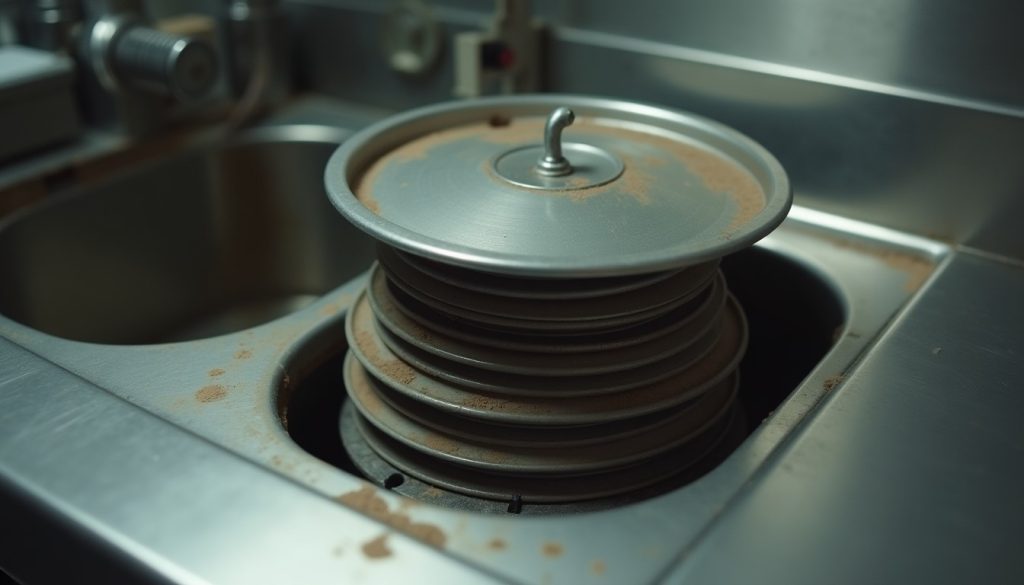
A grease trap is a baffled tank that slows kitchen wastewater so fats, oils and grease float out before reaching the sewer; size it by flow rate, pump it at 25 percent full, and follow your local FOG ordinance.
Key Takeaways
- Grease caused 47 percent of reported sewer blockages, the single largest cause, in EPA’s 2004 Report to Congress on sewer overflows.
- IPC Section 1003.3.5 lets hydromechanical interceptors be sized to PDI G101 or ASME A112.14.3, both rated in gallons per minute.
- Gravity interceptors are sized by volume: flow in gpm times a 30-minute detention time, so 20 gpm needs about 600 gallons, per Plumbing & Mechanical.
- The 25 percent rule: pump before grease plus solids reach a quarter of the liquid depth, as the Sioux City FOG program explains.
- Pumping runs roughly $200 to $400 for a 500-gallon tank and $400 to $600 for 1,000 gallons, per Texway Wastewater’s 2024 guide.
- Schier’s 2026 wholesale list prices run from $984 for its smallest Great Basin unit to $26,359 for the GB-1000, before labor, excavation and permits.
What does a grease trap do?
A grease trap holds kitchen wastewater long enough for fats, oils and grease (FOG) to float to the top and food solids to sink, then lets the cleaner middle layer flow to the sewer. Inlet and outlet baffles slow the flow and keep the floating grease from escaping. It protects the building drain and the public sewer from grease clogs. Preventing that grease buildup starts long before the trap, which is why pouring grease down the drain remains a common kitchen habit worth breaking.
The stakes are bigger than one kitchen. Grease cools and hardens on sewer pipe walls, and EPA’s 2004 Report to Congress on combined and sanitary sewer overflows named grease the most common cause of reported blockages, at 47 percent. That is why sewer utilities, not just plumbing inspectors, police these devices.
How much grease comes off a plate surprises most owners. Sioux City’s FOG guide compares its 400 mg/L oil and grease discharge limit with common foods: whole milk carries about 37,000 mg/L, ranch dressing about 470,000 mg/L and mayonnaise about 670,000 mg/L. A splash of dressing rinsed down a sink blows past the limit many times over.
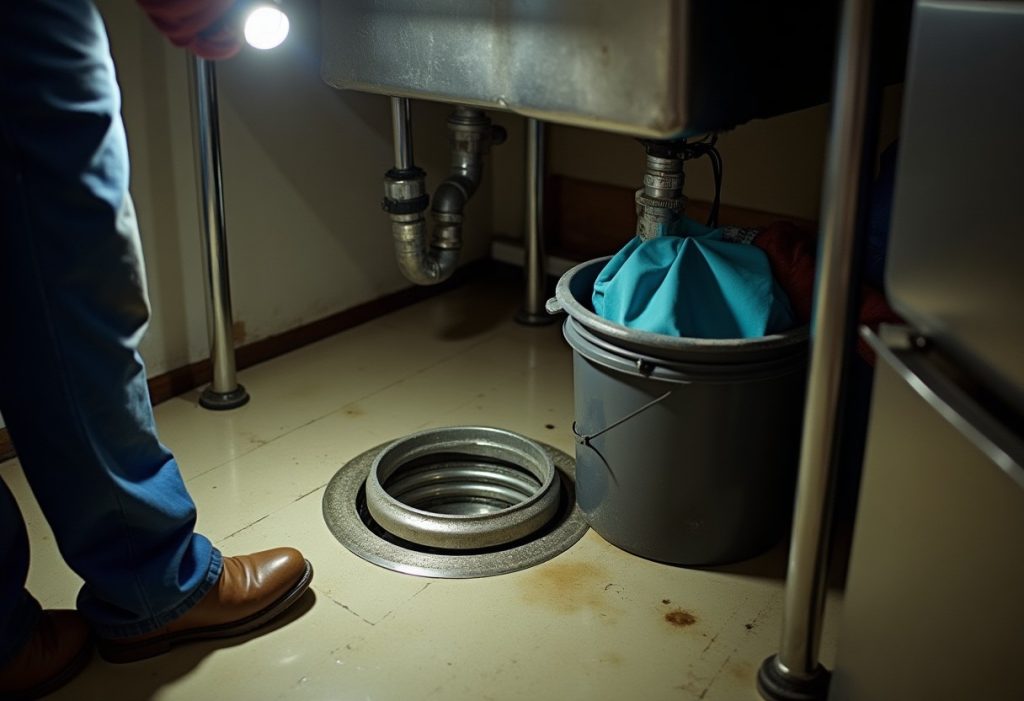
What is the difference between a grease trap and a grease interceptor?
A grease trap usually means a small hydromechanical unit inside the kitchen, rated in gallons per minute (gpm) and cleaned often, sometimes by staff. A grease interceptor usually means a large in-ground gravity tank, rated in gallons and pumped by a hauler. The code book uses “grease interceptor” for both, so local rules decide which one a kitchen needs.
| Feature | Hydromechanical grease interceptor (“trap”) | Gravity grease interceptor (“interceptor”) |
|---|---|---|
| Typical location | Under the sink, in the floor, or just outside the wall | Buried outdoors, often in the parking lot |
| How it is rated | Flow rate in gpm plus grease capacity in pounds | Liquid volume in gallons |
| Sizing standards | PDI G101, ASME A112.14.3, ASME A112.14.4, CSA B481.3 (IPC 1003.3.5) | Flow x detention time, or a local sizing formula |
| Common sizes | Roughly 4 to 100 gpm (IPC Table 1003.3.5.1 range) | 300, 500, 750, 1,000, 1,250, 1,500, 2,000 and 3,000 gallons (Plumbing & Mechanical) |
| Who cleans it | Often kitchen staff, weekly or more | Licensed or approved hauler with a vacuum truck |
| Example product | Schier GB-75 (75 gpm, 616 lb rated grease capacity) | Precast concrete tanks from local precasters |
| Fits best | Small cafes, bars, retrofits with no yard space | Full-service restaurants, high-volume kitchens, new builds |
Many sewer utilities now require an outdoor gravity interceptor for new full-service restaurants and allow indoor units only for low-volume or space-limited sites. That choice is local, so verify with your local authority before you buy anything.
How do you size a grease trap?
Size a hydromechanical grease trap by the peak flow it must handle in gpm, and size a gravity interceptor by multiplying that flow by a detention time, commonly 30 minutes. The IPC, Section 1003.3.5, names PDI G101 and ASME A112.14.3 among the accepted sizing and rating standards. Local FOG programs may override with their own formula.
The PDI G-101 fixture method
The common PDI G-101 approach sizes the unit from the fixtures it serves. A plumber estimates each sink’s volume, applies a fill factor, then picks a drain-down period.
- Measure each sink compartment: length x width x depth in inches.
- Divide cubic inches by 231 to get gallons.
- Multiply by a 0.75 fill factor, since sinks are rarely filled to the rim.
- Divide by the drain period: 1 minute for a fast-drain rating, 2 minutes for a slower one.
- Pick the next standard gpm rating at or above the result.
Worked example: a three-compartment sink with 18 x 24 x 12 inch bowls holds 15,552 cubic inches, or about 67 gallons. At 75 percent that is about 50 gallons. On a 1-minute drain it calls for a 50 gpm unit; on a 2-minute drain, 25 gpm. Most hydromechanical units ship with a flow control fitting so the inlet cannot exceed the rating.
Grease retention capacity under the IPC
Flow is half the spec. IPC Table 1003.3.5.1 pairs every hydromechanical flow rating with a minimum grease retention capacity of 2 pounds per gpm. Verify the table against the code edition your jurisdiction adopted.
| Rated flow (gpm) | Minimum grease retention (lb) | Gravity volume at 30 min (gal) |
|---|---|---|
| 20 | 40 | 600 |
| 35 | 70 | 1,050 |
| 50 | 100 | 1,500 |
| 75 | 150 | 2,250 |
| 100 | 200 | 3,000 |
Certified capacity matters for pumping cost. A unit rated well above the code minimum, such as the Schier GB-75 at 616 pounds against a 150-pound minimum, holds more grease between pump-outs.
How often should a grease trap be pumped?
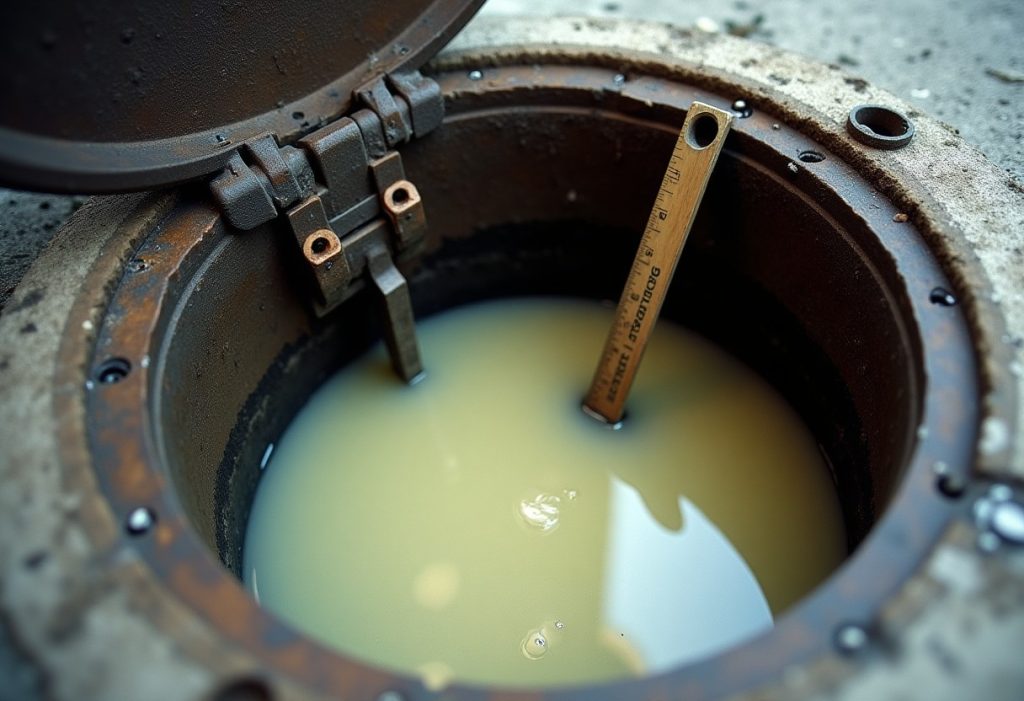
Pump a grease trap before floating grease plus settled solids reach 25 percent of the total liquid depth, or on your permit’s minimum schedule, whichever comes first. Small indoor traps often need weekly cleaning. Outdoor interceptors commonly run monthly to quarterly. The right interval comes from measuring the layers, not from a calendar alone.
The Sioux City FOG guide walks through the math. Its example interceptor holds 4.0 feet of contents with 0.5 feet of grease on top and 1.0 foot of solids below. That totals 1.5 feet, or 37.5 percent, so it fails and the kitchen must pump more often.
- Open the lid and push a sludge judge or measuring stick to the bottom.
- Read the grease mat thickness at the top and the solids layer at the bottom.
- Add the two layers and divide by the total liquid depth.
- If the result is near 25 percent, shorten the pumping interval.
- Log the date, depths and hauler manifest number.
Sioux City requires interior grease traps to be maintained weekly at a minimum, by staff or a certified hauler, and exterior interceptors to be pumped by a certified hauler when the 25 percent mark is hit. Several other city programs set a quarterly minimum for outdoor units. Rules differ, so read your own permit. Checking your local permit before pulling that trigger matters, since skipped maintenance is exactly what creates a sewer-blocking fatberg downstream.
How much does a grease trap cost to install and pump?
Pumping a grease trap typically costs $200 to $400 for a 500-gallon tank and $400 to $600 for a 1,000-gallon tank, according to Texway Wastewater’s 2024 price guide. Equipment for installation ranges from about $1,000 for a small hydromechanical unit to over $26,000 for a large poly interceptor at list price, before labor, digging and permits.
| Cost item | Typical range | Source |
|---|---|---|
| Pump-out, 500-gallon tank | $200 to $400 | Texway Wastewater, 2024 |
| Pump-out, 1,000-gallon tank | $400 to $600 | Texway Wastewater, 2024 |
| Pump-out, 2,000 gallons and up | $600 to $1,000+ | Texway Wastewater, 2024 |
| Disposal fee per gallon | $0.15 (Midwest) to $0.45 (West Coast) | Texway Wastewater, 2024 |
| Schier GB-50 / GB-75 unit | $2,780 / $3,923 list | Schier 2026 wholesale list |
| Traffic-rated cast iron cover add-on | $800 per cover | Schier 2026 wholesale list |
The chart uses Schier’s wholesale list prices effective January 1, 2026. Contractors rarely pay full list: one distributor showed the GB-75 at $2,746 against its $3,923 list. Use list as a ceiling for budgeting the box itself.
Installation labor is where quotes split widest. An indoor unit set beside a sink may take a plumber part of a day. An outdoor interceptor means saw-cutting pavement, excavation, anti-flotation anchoring in wet soil, new sewer connections and repaving. We found no reputable national survey of installed cost, so get at least two itemized bids.
Pumping adds up over a year. A 1,000-gallon interceptor pumped quarterly at $400 to $600 a visit runs about $1,600 to $2,400 a year, before any line cleaning.
What does the plumbing code require for grease traps?
The International Plumbing Code, Chapter 10, Section 1003, requires grease interceptors where fixtures in food service operations discharge FOG, sets the sizing and rating standards, and covers venting and access. Your sewer utility’s FOG ordinance then adds pumping intervals, discharge limits and record rules. Requirements vary by city, so verify with your local authority.
Two layers of rules apply, and owners often know only one. The plumbing code governs the device: type, size, location, venting and access. The local FOG ordinance, written under the federal pretreatment rule at 40 CFR 403.5(b)(3), which bars pollutants that obstruct sewer flow, governs how you run it.
- Which fixtures connect: pot sinks, prep sinks, floor drains and mop sinks in grease areas commonly must drain through the unit. Codes differ on dishwashers.
- Disposers: many codes and FOG ordinances bar food waste disposers from discharging into a grease interceptor.
- Discharge limits: EPA data show local oil and grease limits typically run 50 to 450 mg/L, with 100 mg/L the most common. Sioux City sets 400 mg/L.
- Records: most programs require a maintenance log and hauler manifests on site for inspectors.
- Permits: new or replacement units almost always need a plumbing permit and often a separate FOG or wastewater discharge permit.
How do you maintain a grease trap between pump-outs?
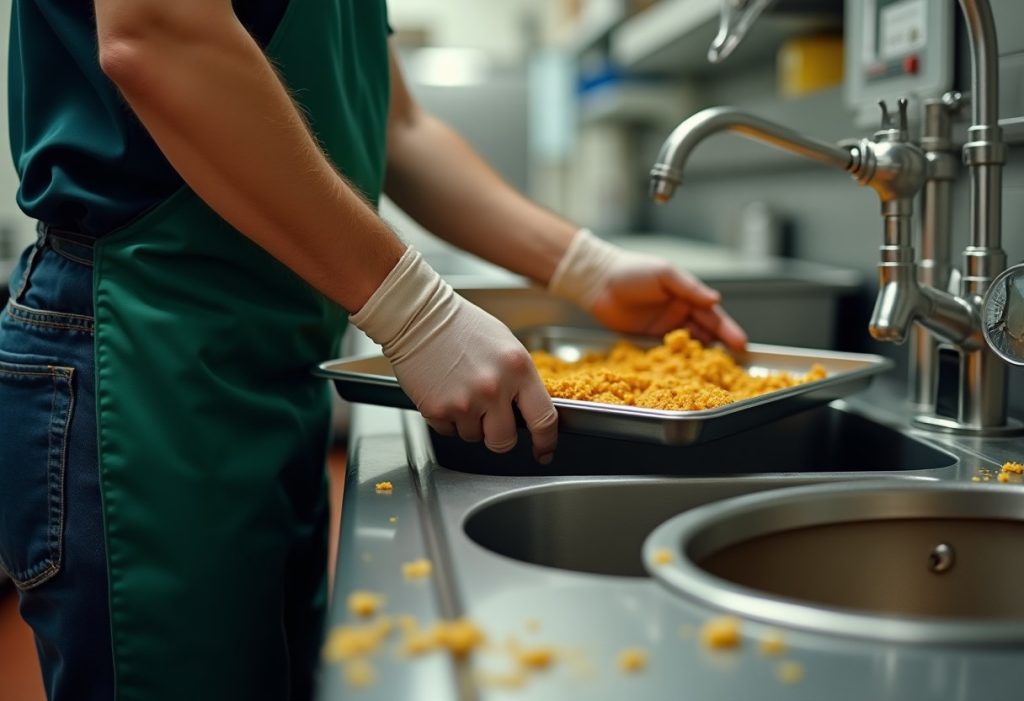
Keep FOG and food out of the drain in the first place: scrape and dry-wipe plates into the trash, use sink strainers, recycle fryer oil, and keep wash water below 140°F. Then measure the trap on a schedule, keep the lids sealed, and log every cleaning. These habits stretch pumping intervals and keep you inside the 25 percent rule.
The Sioux City program lists 18 best management practices. The ones that move the needle most:
- Train staff at least once a year and keep proof of training.
- Scrape and dry-wipe pots, pans and plates into the trash before washing.
- Put strainers in sinks and screens on floor drains, and empty them daily.
- Recycle waste cooking oil into a proper container, never down a drain.
- Keep wash water below 140°F so grease separates instead of passing through.
- Watch every pump-out so the hauler empties the whole tank, not just the top.
Pumping clears the tank, not the pipes. Grease that slips past a full trap coats the lines downstream, and the lines feeding the trap collect grease too. Many service contracts pair pump-outs with periodic hydro-jetting of the kitchen laterals, which scours the full pipe wall rather than punching a hole through the clog.
Skip additives sold as grease fixes. Enzymes, bacteria products and hot water can break FOG loose so it passes the trap and re-hardens further down the sewer, and some FOG programs restrict them. Ask your utility before you use any.
What should plumbers know about grease trap work?
Grease trap work is steady, code-driven commercial revenue: every food service permit creates installs, every FOG inspection creates repairs, and every interceptor needs line maintenance between pump-outs. Plumbers who know PDI G-101 sizing, local FOG rules and the permit path can win repeat accounts that residential calls cannot match.
New installs and retrofits need sizing math, permits and often excavation. Repairs cover cracked baffles, failed lids, broken flow controls and bad tees. Recurring service includes jetting, camera inspection and helping owners pass FOG audits.
Restaurant groups and property managers buy on reliability and compliance paperwork. A clean log, a quick turnaround after a failed inspection and a sizing calc on your letterhead win the bid. For how to price and pursue that work, see our guide to winning commercial plumbing contracts.
How we sourced this
We ran live searches for “grease trap” and pumping-frequency questions in October 2026 to map what top pages and People Also Ask cover, then went to primary sources. We cited EPA’s 2004 Report to Congress and pretreatment data, IPC Chapter 10 (Section 1003.3.5 and Table 1003.3.5.1), the Sioux City, Iowa, FOG program, Plumbing & Mechanical’s sizing method, Schier Products’ 2026 wholesale list price sheet, and Texway Wastewater’s 2024 pumping price guide. We consulted but did not cite several cost sites that published unsourced figures. The PDI G-101 sink example is our own arithmetic using the standard fill factor and drain periods. Code sections vary by adopted edition and city; verify with your local authority.
Frequently asked questions
Is a grease trap required for a restaurant?
In most US jurisdictions, yes. The International Plumbing Code, Section 1003, calls for a grease interceptor where food service fixtures discharge fats, oils and grease, and most sewer utilities enforce a local FOG ordinance on top of the plumbing code. Some cities exempt low-volume operations such as prepackaged food sellers, so verify with your local authority before you build out.
What is the 25 percent rule for grease traps?
The 25 percent rule says the combined depth of floating grease and settled solids must stay below 25 percent of the trap’s total liquid depth. Sioux City, Iowa, shows the math in its FOG guide. Half a foot of grease plus one foot of solids in a 4-foot interceptor equals 37.5 percent, which fails and means the kitchen must pump more often.
How often should a grease trap be cleaned?
Clean it before grease and solids reach 25 percent of liquid depth, or on your permit’s minimum schedule, whichever comes first. Sioux City requires indoor grease traps to be cleaned weekly at a minimum, and several city programs set a quarterly minimum for outdoor interceptors. Fryer-heavy kitchens often need monthly service, so measure the layers to find your real interval.
How much does it cost to pump a grease trap?
Texway Wastewater’s 2024 price guide puts pumping at roughly $200 to $400 for a 500-gallon tank, $400 to $600 for a 1,000-gallon tank, and $600 to $1,000 or more for tanks of 2,000 gallons and up. Disposal fees alone run about $0.15 to $0.45 per gallon depending on region. Small indoor traps cleaned by staff cost labor time only.
What happens if you don’t clean a grease trap?
Grease and solids build past the outlet baffle and wash into the sewer, where the grease hardens on pipe walls and causes backups. EPA’s 2004 Report to Congress found grease was the most common cause of reported sewer blockages, at 47 percent. Owners may face slow drains, odors, surcharge fees, fines, and cleanup bills if an overflow traces back to the kitchen.
Can a garbage disposal drain into a grease trap?
Generally no. Many plumbing codes and local FOG ordinances bar food waste disposers from discharging into a grease interceptor, because ground food fills the solids layer fast and shortens the time grease has to separate. Some cities allow a disposer only through a separate solids interceptor. Check the code edition your city adopted and your sewer utility’s FOG rules before connecting one.
Can I clean my own grease trap?
Small indoor traps are often cleaned by kitchen staff, who skim the grease, scoop the solids, scrape the baffles and log the date. Sioux City lets either staff or a certified hauler maintain interior traps. Large outdoor interceptors almost always need a licensed or approved hauler, because the waste must be manifested and taken to an approved disposal site.
Where is a grease trap usually installed?
A hydromechanical grease trap, the small unit most people mean by the term, usually sits under the sink, in the floor, or just outside the wall. That differs from a gravity grease interceptor, which is a larger tank buried outdoors, often in the parking lot. Local rules decide which type a given kitchen must use, so the exact placement depends on the permit and the available space.