Plumbing Price List 2026: Flat-Rate Costs by Job

A plumbing price list is a flat-rate reference that shows what common jobs cost as a single upfront number rather than an open-ended hourly meter. For 2026, most small jobs like a faucet swap or drain clearing run $100 to $400, mid-size work like a water heater or sump pump runs $500 to $2,500, and major jobs like a repipe climb into five figures. The table below lists typical ranges by job. Before quoting from that table, plumbers themselves might want to see how flat-rate prices get built from actual overhead and billable hours.
The 2026 plumbing price list by job
This is the core reference: typical flat-rate ranges for the plumbing jobs homeowners book most, grouped by category. Ranges reflect labor plus standard parts for a straightforward install or repair, before permits, premium fixtures, or after-hours surcharges. Figures are compiled from HomeGuide, Angi, HomeAdvisor, and Housecall Pro 2026 pricing. Use them to sanity-check a quote, not as a guaranteed total for your home.
| Category | Job | Typical price range | Usually includes |
|---|---|---|---|
| Fixtures | Faucet replace or install (kitchen or bath) | $120 to $350 | 1 to 2 hours labor, standard faucet set |
| Fixtures | Sink install (kitchen or bath) | $200 to $525 | Set sink, connect supply and drain |
| Fixtures | Toilet install (remove old, set new) | $200 to $800 | Haul-off, new wax ring, reseat and test |
| Fixtures | Toilet repair (flapper, fill valve, wax ring) | $100 to $310 | Diagnose and replace one failed part |
| Fixtures | Garbage disposal install or replace | $200 to $450 | Remove old unit, mount and wire new |
| Fixtures | Showerhead or shower valve replace | $150 to $600 | Valve access, swap, pressure test |
| Drains and sewer | Drain clearing or snake (sink, tub, toilet) | $125 to $350 | Auger single line, clear the clog |
| Drains and sewer | Main line snake through cleanout | $200 to $500 | Cable main line, clear roots or grease |
| Drains and sewer | Hydro jetting | $300 to $1,000 | High-pressure scour of the line |
| Drains and sewer | Sewer camera inspection | $150 to $400 | Scope the line, locate the fault |
| Drains and sewer | Sewer line spot repair | $1,200 to $4,000 | Excavate and replace a damaged section |
| Drains and sewer | Sewer line replacement | $3,000 to $10,000 | Full line, often multi-day |
| Water heater | Water heater repair (element, thermostat, valve) | $150 to $750 | Diagnose and replace the failed part |
| Water heater | Tank replacement (40 to 50 gal) | $900 to $2,500 | Remove, install, connect and test |
| Water heater | Tankless install | $1,800 to $4,500 | Unit, gas and venting, mounting |
| Water heater | Expansion tank or T&P valve | $100 to $350 | Install code-required safety part |
| Pipes and leaks | Minor leak repair (visible pipe) | $150 to $400 | Locate and patch or replace a joint |
| Pipes and leaks | Pipe section repair | $150 to $500 | Cut out and replace a run of pipe |
| Pipes and leaks | Burst pipe repair | $1,000 to $4,000 | Repair plus access, excludes water damage |
| Pipes and leaks | Leak or slab leak detection | $125 to $400 | Locate a hidden or under-slab leak |
| Pipes and leaks | Slab leak repair | $500 to $4,000 | Access and repair the failed line |
| Pipes and leaks | Whole-home repipe | $4,000 to $15,000 | Replace supply lines, PEX or copper |
| Valves and lines | Angle stop or fixture shut-off valve | $150 to $375 | Replace a single supply shut-off |
| Valves and lines | Main water shut-off valve | $375 to $600 | Replace the whole-house shut-off |
| Valves and lines | Hose bib or outdoor spigot replace | $150 to $400 | Swap exterior faucet, test for leaks |
| Valves and lines | Water pressure regulator | $250 to $650 | Replace and set the PRV |
| Valves and lines | Main water line repair | $750 to $2,500 | Repair the supply line to the house |
| Pumps and other | Sump pump repair | $300 to $700 | Diagnose and fix the existing pump |
| Pumps and other | Sump pump install or replace | $650 to $1,800 | New pump, check valve, test cycle |
| Pumps and other | Water softener install | $800 to $2,500 | Set unit, plumb bypass and drain |
| Fees | Service or trip fee | $50 to $150 | Travel plus first diagnostic visit |
| Fees | Emergency or after-hours dispatch | $150 to $350+ | 1.5x to 3x rate on top of the job |
For repair jobs specifically, our repair-specific price ranges break each fix down further with the parts and labor split. Prices above assume standard access and stock fixtures. Swap in a designer faucet or a hard-to-reach shut-off and the same line item moves toward the high end.
How a flat-rate price is built
A flat-rate number is not a guess. Shops build each price-list line from four inputs: expected labor hours, a billable labor rate, the parts cost, and an overhead markup that covers trucks, insurance, and warranty. Understanding this math is the difference between reading a quote as fair or feeling gouged, and it is the part most homeowner price guides leave out.
Take a mid-range faucet replacement quoted at $260. The line item often decomposes like the example below, where labor and overhead, not the part, drive most of the total.
| Component | Example amount | What it covers |
|---|---|---|
| Labor | $110 | About 1.25 billable hours at the shop rate |
| Parts | $45 | Faucet and supply lines at cost |
| Overhead and markup | $85 | Truck, fuel, insurance, dispatch, warranty |
| Trip fee (often credited) | $20 | Portion of the service call rolled in |
Most modern shops price straight from a standardized book so every tech quotes the same job the same way. That book is usually generated inside field-service software that builds the price book, which lets an office set target margins per task. Owners who want the strategy behind those margins can read our operator playbook on how to grow a plumbing business.
What moves a plumbing price up or down
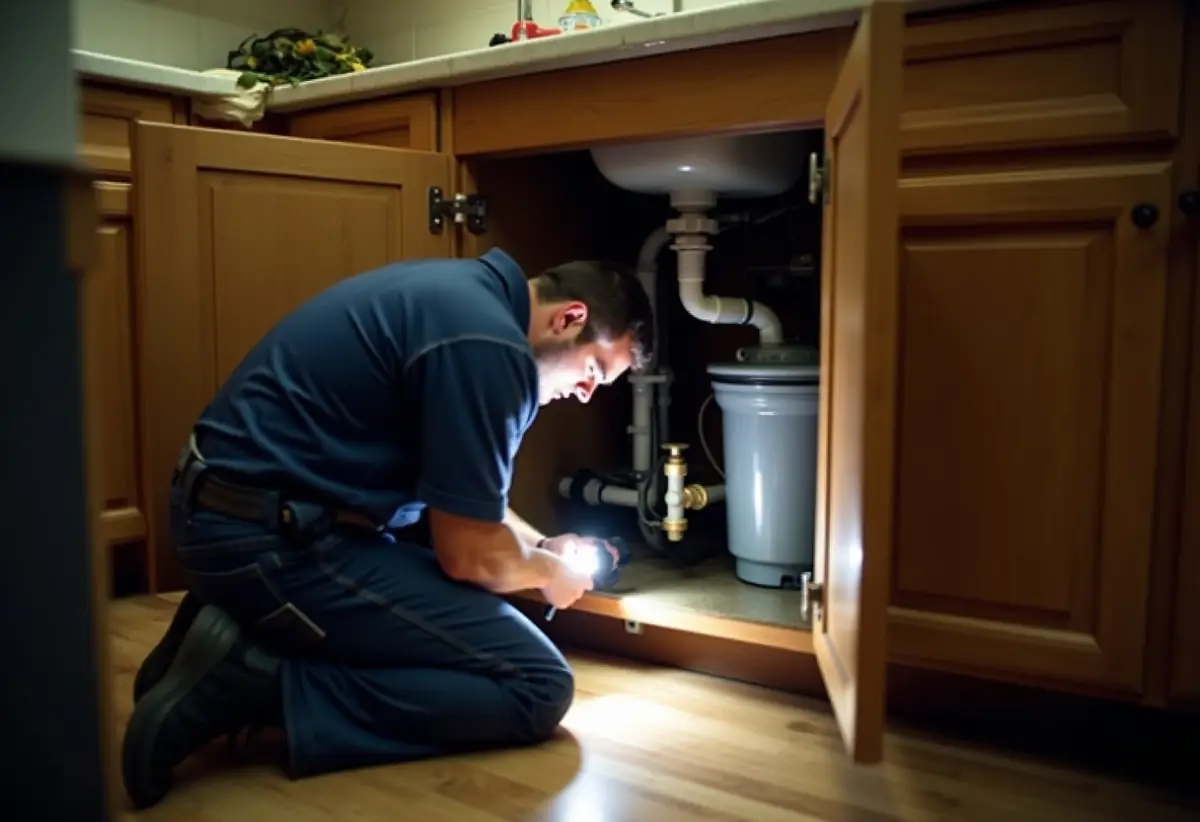
The same job can vary by a wide margin depending on six factors. A quote near the low end of the table usually means easy access and a stock part; a quote near the high end reflects one or more of the drivers below. None of these mean a plumber is overcharging, they reflect real differences in the work.
- Region: urban and coastal markets often bill 15 to 40 percent above the national baseline.
- Job access: a shut-off buried behind a wall or under a slab adds labor hours fast.
- Fixture grade: a builder-grade faucet and a designer model can differ by hundreds in parts alone.
- Permits and code: gas, sewer, and water heater work may require a permit and inspection in many areas.
- Timing: nights, weekends, and holidays trigger 1.5 to 3 times the standard rate.
- Diagnosis: hidden leaks or intermittent faults add detection time before any repair starts.
Because these drivers stack, a $150 job in one home can be a $400 job next door. That is why a flat rate is quoted for your specific situation, not lifted straight off a list.
Flat rate vs hourly on your invoice
Most residential shops now quote flat rates for standard jobs, while hourly billing survives for open-ended or diagnostic work. A flat rate gives you one approved number before work starts; hourly bills you for actual time, which can help on simple fixes and hurt on complicated ones. The labor math underneath is the same either way. Shop owners weighing which model fits their crew can compare the tradeoffs in more detail in switching between flat rate and hourly pricing.
To compare a flat quote against hourly norms, back out the labor portion and divide by the estimated hours. If a $260 faucet job assumes 1.25 hours of labor, the effective rate is near $90 per hour, which tracks the national band. For the full picture on hourly billing, see our tracker on how much plumbers charge per hour and its regional index.
| Pricing model | Best for | Watch out for |
|---|---|---|
| Flat rate | Standard, defined jobs; price certainty | 15 to 30 percent higher average ticket |
| Hourly | Diagnostics, unknown scope, quick fixes | Open-ended total if the job runs long |
How to read a plumbing price list or quote
Reading a quote well takes four checks. The goal is to confirm the number matches the job, not to haggle a fair price down. Run through these steps before you approve any flat-rate figure so you know what is included and what could push the total higher.
- Match the job to a line in the price list above and confirm your quote lands inside the range.
- Ask whether the trip or service fee is credited toward the repair.
- Confirm what the flat rate excludes: permits, disposal, premium fixtures, or wall and slab access.
- Get the labor and parts split so you can compare the effective hourly rate to local norms.
If the quote sits above the published band, the driver is usually access, fixture grade, or timing rather than a padded rate. Asking which factor moved the number is the fastest way to understand a high quote, and often the fastest way to bring it down by adjusting the fixture or the schedule.
Frequently asked questions
How much does a plumber charge for a small job?
Most small plumbing jobs run $100 to $400 as a flat rate in 2026, covering common work like clearing a drain, swapping a faucet, or fixing a running toilet. That figure usually folds in the trip charge, an hour or two of labor, and small parts. Bigger single jobs like a water heater or sump pump often start near $500.
Do plumbers charge a call-out or service fee?
Yes. Most plumbers add a service or trip fee of $50 to $150 in typical areas, up to $250 in high-cost metros, to cover travel and the first diagnostic visit. Many shops credit that fee toward the repair if you approve the work. Emergency and after-hours dispatch fees often run $150 to $350 on their own.
Are flat-rate plumbers cheaper than hourly?
Not always cheaper, but more predictable. A flat rate bakes in assumed labor hours, materials, and overhead so you approve one number before work starts. Industry data shows flat-rate pricing lifts the average ticket 15 to 30 percent over hourly billing, yet it removes the risk of a job running long. Ask for the labor portion to compare it against local hourly norms.
What is a fair price for common plumbing work in 2026?
A fair 2026 price tracks the published ranges: faucet install $120 to $350, toilet install $200 to $800, drain clearing $125 to $350, and a tank water heater replacement $900 to $2,500, per HomeGuide, Angi, and HomeAdvisor. If a quote lands inside these bands for your region and job access, it is likely competitive rather than high.
Why do two plumbers quote different prices for the same job?
Because a flat rate reflects each shop’s cost of doing business, not just the task. Region, job access, fixture grade, permits, and whether the work is after-hours all move the number. A shop with trucks, insurance, warranties, and dispatch prices higher than a solo operator. Getting two or three quotes on a defined job is the simplest way to check the range.
Last reviewed: August 2026.